https://substack.com/home/post/p-201307700
"A few days ago, under a piece of mine, an atheist I genuinely respect — he writes as The Honest Trap, and we have been circling each other’s arguments for a while now, with more mutual concession than either of us probably expected — drew a line I think is exactly right.
He said: “A position that cannot be falsified by any conceivable evidence is not a position. It is a fixture.”
I want to start by agreeing with him. Not strategically. Actually. A belief you hold in a way that no possible evidence could ever dislodge is not a belief you arrived at by looking. It’s a belief you arrived at by deciding, and then defended against the world. He is right that this is the difference between an honest mind and a closed one, and he is right that the test of a position worth holding is whether it has exposed itself to the possibility of being wrong.
Earlier in the same conversation he drew a second distinction, just as sharp. Trust, he said, is calibrated by evidence and revised by outcome — you trust a bridge, and if it collapses, the trust is revised. Faith, he said, is commitment regardless of outcome, and “regardless of outcome” is the grammatical signature of faith, not trust.
I think that distinction is mostly right too, and I’m not going to play word games with it. But I want to do something with both of his principles that I don’t think he’s expecting. I don’t want to argue against them. I want to apply them — to the reliability of the biblical text itself — and show that the Bible is not the fixture he assumes it must be. It is, by his own standard, one of the most thoroughly falsifiable documents the ancient world ever produced. It has been making checkable bets for three thousand years. And the record of what happened when people tried to collect on those bets is not what the skeptic expects.
This is the short version. I’m writing it as a direct reply to a thread, so I’m going to keep it to the spine and leave the full skeleton — the prophecy data, the internal cross-attestation, the granular textual-criticism comparisons — for a longer piece I’ll publish after this. There is, frankly, enough material here for a hundred essays. But the spine is enough to make the point.
· · ·
Let me start by clearing my own side of the table.
If you’ve spent any time around Christian apologetics, you’ve heard some numbers. And I have to tell you, before I tell you anything else, that several of the most popular ones are junk.
You’ve heard that we have ten manuscripts of Caesar’s Gallic Wars, and over five thousand of the New Testament, so why do you doubt the one and not the other? The five-thousand figure is real. The “ten copies of Caesar” figure is not. Once you count the later witnesses, Caesar survives in something closer to two hundred and fifty manuscripts. Homer’s Iliad, which the same apologists often put at 643, actually survives in around 1,800. Plato is not seven manuscripts; it’s a couple hundred. I’m not getting these corrections from a skeptic blog. I’m getting them from the Christian Research Institute, an apologetics organization, which has been trying for years to get its own side to stop using stale numbers.
And you’ve almost certainly heard the big one: that the early church fathers quoted the New Testament so exhaustively that if every manuscript on earth were destroyed, we could reconstruct the entire thing from their quotations — all but eleven verses.
That one is a myth. Not an exaggeration. A myth, with a paper trail. It traces back to an anecdote about an eighteenth-century amateur named Lord Dalrymple, recorded fifty years after the fact by a man who couldn’t remember whether the number was seven verses or eleven. When someone finally went and checked Dalrymple’s actual notes, he’d found matches for about 3,600 of the New Testament’s roughly 7,900 verses — forty-six percent, not “all but eleven.” Bruce Metzger, the greatest textual scholar of the twentieth century, and his student Bart Ehrman, who is now one of the faith’s most prominent critics, both say plainly that you could not reconstruct an accurate New Testament from patristic quotations, because the fathers quoted loosely, from memory, and constantly disagreed with each other.
I’m telling you the bad news about my own side first, and I’m doing it on purpose, for the reason Aquinas gave when he opened every argument by stating his opponent’s case as strongly as he could: a man who will not name the weak points in his own position has not earned your trust when he names its strengths. So here is me naming them. A good chunk of what gets repeated in church basements about Bible manuscripts is inflated, stale, or simply false.
Now. Having thrown out the junk — here is what’s left. And what’s left is stronger than the junk ever was, because it’s true.
· · ·
Start with the comparison done honestly, because even after you correct every inflated number, the New Testament still stands alone.
We trust Caesar’s account of the Gallic Wars. Historians build the chronology of Rome on it. The earliest manuscript we have was copied roughly nine hundred years after Caesar wrote. We trust Tacitus, whose Annals are a backbone of first-century Roman history; large portions survive in two manuscripts, the earliest copied some eight hundred years after he died. Homer, the best-attested pagan work of antiquity, has its earliest substantial copies about a thousand years downstream of composition.
The New Testament has fragments within a generation of the events, substantial manuscripts within about a century and a half, and complete copies within three hundred years — preserved across roughly 5,800 Greek manuscripts and tens of thousands more in other languages. No serious textual scholar disputes these orders of magnitude. The gap between writing and earliest copy, for the New Testament, is the smallest in the entire ancient world by a wide margin, and the volume of cross-checkable witnesses is the largest by an order of magnitude.
Here is the part that matters for The Honest Trap specifically, because it’s an argument about consistency, which is his own favorite tool.
If you accept the text of Caesar and Tacitus and Herodotus as substantially what they wrote — and essentially every historian does — then you are accepting them on far less documentary evidence than the New Testament offers, across far larger time gaps, with far fewer copies to cross-check. So the person who says “I accept Caesar but I reject the New Testament as a transmitted document“ is not applying a high standard. He’s applying two standards. He’s trusting the thin record and doubting the thick one, and the only thing that distinguishes them is the content — which is a reason to dislike the New Testament’s claims, but not a reason to doubt that we have, accurately, what its authors wrote.
I want to be precise, because precision is the whole game here. I am not saying the manuscript count proves Christianity is true. That would be a terrible argument, and he’d be right to demolish it. A well-attested text can be well-attested fiction. What the manuscript evidence establishes is narrower and unglamorous: we know what the authors wrote. The transmission is secure. Whatever you decide about whether it’s true, you’re deciding about the actual text, not a medieval corruption of it. That’s all this particular argument buys. But it buys that completely.
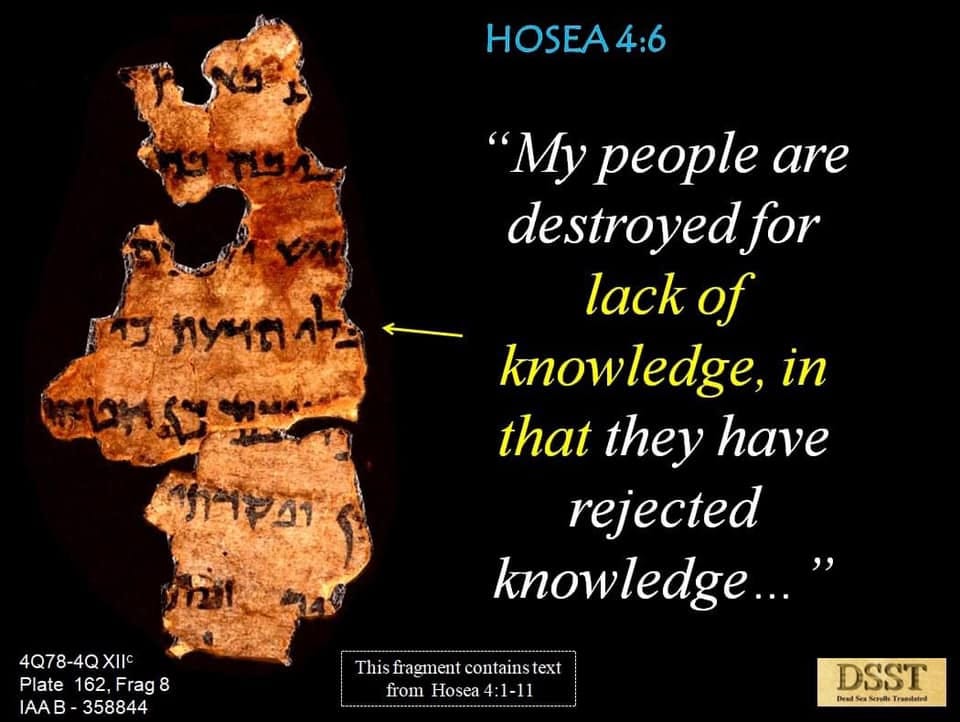
Now let me show you why the transmission is secure, because the mechanism is the most interesting part, and it’s where the contrast with every other holy book becomes visible.
The New Testament text was not preserved by an authority. It was preserved by chaos.
Within a few generations the documents had scattered across the whole Mediterranean — Greek, Latin, Syriac, Coptic — into the hands of communities that didn’t all like each other, couldn’t all reach each other, and had no central office issuing approved editions. Thousands of copies got made by thousands of hands in dozens of places with no coordination whatsoever. And that turns out to be the strongest possible guarantee of integrity, for a reason that’s almost counterintuitive: nobody could have changed it even if they’d wanted to. To alter the New Testament, you’d have had to simultaneously corrupt thousands of independent copies already dispersed across three continents, in multiple languages, held by rival factions, with no way to recall them. It’s not that no one tried to fudge a line here or there. It’s that the fudges are detectable — precisely because you can lay thousands of independent witnesses side by side and see exactly where one scribe’s hand slipped. The variants aren’t a scandal. They’re the audit trail. The very messiness that skeptics point to is the thing that makes the text checkable.
This is reliability by transparency. Reliability by redundancy. Reliability by the fact that the thing was never under anyone’s control.
Hold that next to how the Quran achieved its uniformity, because the contrast is not an insult — it’s just history, and Muslim tradition itself records it. About twenty years after Muhammad’s death, the caliph Uthman, faced with communities reciting in divergent ways, commissioned a single standardized text and ordered the variant copies burned. We’re not speculating about this; it’s in the Islamic sources, told as an act of pious good order. And the material record shows what it cost: the Sana’a palimpsest, one of the oldest Quranic manuscripts in existence, is a page where an older text was scraped off and written over — and the scraped-off lower layer preserves a version that differs from the standard one. It is the only substantial surviving witness to the textual tradition Uthman’s fire was meant to erase.
So you have two completely different roads to a stable text. The Quran reached uniformity early and cleanly — by authority, by standardization, by removing the competition. The New Testament reached uniformity slowly and messily — by never having an authority that could remove the competition, leaving us thousands of uncontrolled witnesses to cross-examine. One is uniformity you’re asked to trust because the variants were destroyed. The other is uniformity you can verify because the variants survived. For a man whose entire epistemology is “calibrated by evidence and revised by outcome,” I’d think the second kind is the only kind worth having.
* * *
But all of that is about words on a page. The Honest Trap asked for something harder, and fairer. He asked, in effect: does the book make claims about the world that the world can check? Because a text that only ever talks about the unfalsifiable — heaven, the soul, the age to come — is exactly the “fixture” he warned about. It risks nothing. It can’t be wrong.
So here is the part of the case I find most genuinely persuasive, and it’s not about manuscripts at all. It’s about dirt.
The Bible is relentlessly, almost recklessly specific. It names kings, cities, governors, building projects, water tunnels, political titles, the particular官 office a particular man held in a particular decade. And every one of those specifics is a falsifiable claim. Each one is the book sticking its neck out, betting that if you dig in the right place you’ll find the thing it described. A purely mythological text doesn’t do this. Myth is set “long ago, in a far country.” Scripture keeps saying this governor, in this city, in this year.
For a long time, the skeptics took those bets. And for a long time, it looked like they were winning.
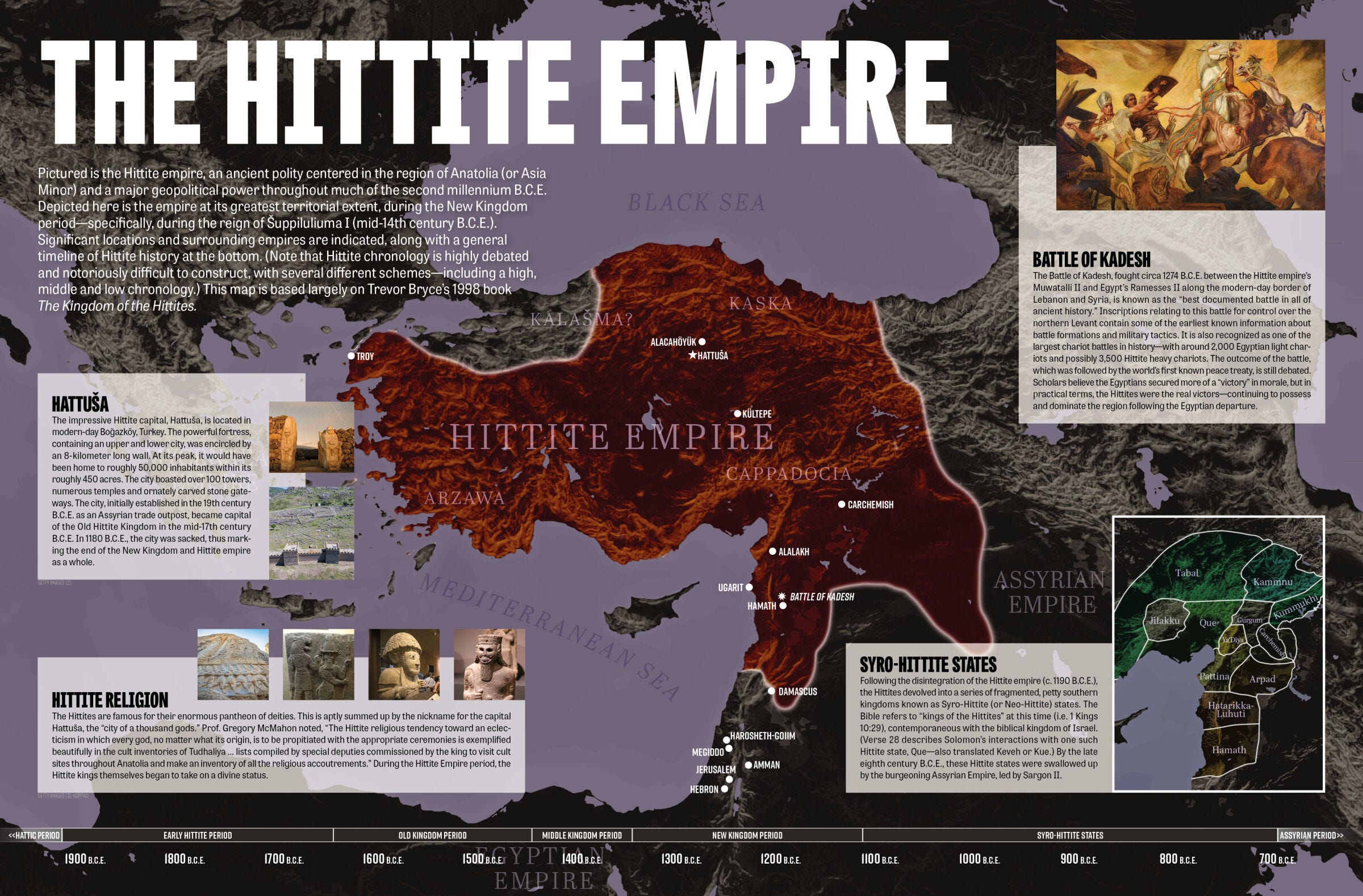
Borrowed from: https://armstronginstitute .org/954-finding-the-hittites
The Bible mentions a people called the Hittites about fifty times. For most of the modern era, there was no independent evidence the Hittites had ever existed, and serious scholars listed them among the Bible’s legendary inventions — a tell that the text was fiction. Then in 1906, archaeologists in Turkey uncovered Hattusa, the capital of a vast, lost Hittite empire. The bet paid out. The text was right and the doubters were wrong.
King David was next. The minimalists argued for decades that David was a literary myth, a Jewish King Arthur, with no more historical reality than a legend. There was no evidence outside the Bible that he’d ever lived. Then in 1993, at Tel Dan in northern Israel, archaeologists pulled out a ninth-century-BC stone inscription — carved by an enemy of Israel — bearing the phrase “House of David.” Erected within about a century and a half of David’s life, by people who had no interest in flattering Judah. The bet paid out again.
Pontius Pilate: skeptics noted that this supposedly important Roman governor left no physical trace, and wondered aloud whether the Gospels had invented or inflated him. Then in 1961, in the theater at Caesarea, a limestone block turned up with his name and title carved into it. Paid out.
The Pool of Siloam, where John’s Gospel says Jesus healed a blind man, was dismissed as a theological symbol — a spiritual metaphor, not a real place. Then in 2004, a sewer repair in Jerusalem cut into ancient steps, and the pool was there, with coins from the time of Jesus confirming it was in use exactly when the Gospel said.
I could keep going for a long time, and in the longer piece I will. But notice the shape of it, because the shape is the whole argument. Over and over, the pattern is identical: the Bible makes a specific, checkable claim. Critics bet against it on the grounds that there’s no external evidence. The ground is dug. The claim is vindicated. Not once, in the history of biblical archaeology, has a verified excavation overturned a clearly-stated biblical claim — while again and again, the doubts themselves have been the thing that got falsified.
That is not the behavior of a fixture. A fixture risks nothing and so can never be proven wrong. This book has been putting falsifiable claims on the table for millennia, the critics have been swinging at them with everything they have, and the claims keep getting up off the mat. By The Honest Trap’s own definition — calibrated by evidence, revised by outcome — that is not faith operating “regardless of outcome.” That’s a track record. The outcome kept being tested, and the outcome kept coming back the same way.
· · ·
Now let me be honest about the limit of all this, because if I overclaim it I forfeit the thing I’m asking him to give me, which is fair-mindedness.
None of this proves the resurrection. None of it proves God. Archaeology can confirm that the Pool of Siloam was real; it cannot confirm that a man gave sight to a blind one there. The manuscripts can prove the eyewitnesses wrote what we read; they cannot prove the eyewitnesses were right. There is a real gap between “this book is a reliable historical document that keeps passing the tests we can run” and “therefore its central miracle happened,” and I’m not going to pretend the gap isn’t there. Anyone who tells you the dirt proves the divinity is selling something.
But that’s not nothing — it’s the opposite of nothing. What it does is move the conversation onto exactly the ground The Honest Trap says he wants it on. It takes the Bible out of the category of “unfalsifiable fixture you either have faith in or you don’t” and puts it into the category of “document with a checkable track record, calibrated by evidence, revised by outcome.” It makes the New Testament a thing you can trust in his precise sense of the word — provisionally, on the evidence, open to revision — rather than a thing you must take on faith in his precise sense of the word.
And it relocates the one claim that can’t be settled by a shovel onto the most exposed ground of all. Because the central claim of the whole enterprise was designed to be falsifiable in the most brutal way imaginable. Paul, writing within a few decades of the event, to people who could still go and check, staked the entire faith on a single historical fact and named the disconfirmation himself: if Christ has not been raised, he wrote, then our preaching is worthless and your faith is worthless. He didn’t hide behind the unfalsifiable. He pointed at a tomb and said: the body settles it. Produce the body, and the whole thing collapses in an afternoon. Two thousand years on, the one piece of evidence that would end Christianity instantly has never been produced — not because no one wanted to, but because the people best positioned to produce it, the authorities with every motive to end the movement in its cradle, apparently could not.
That is a faith that bet its existence on an outcome. Which is the one thing The Honest Trap said faith never does.
· · ·
So here is where I’ll leave it, for now.
My friend, you handed me a standard, and it’s a good one. A position immune to all possible evidence is a fixture, not a position. I agree. I’ll go further: a faith that risks nothing deserves nothing, and a great deal of what passes for religious confidence is exactly the closed, defended, evidence-proof fixture you describe, and you are right to have no patience for it.
But the book itself is not that. The text comes to us through the most transparent, cross-checkable, uncontrolled transmission of any document in the ancient world — uniformity you can verify rather than uniformity you’re ordered to trust. Its specific, worldly claims have been tested by hostile excavation for over a century and have a record of vindication that the doubts cannot match. And its central claim was published, on purpose, with the precise conditions of its own disproof attached.
You said trust is calibrated by evidence and revised by outcome. That’s the only kind of trust I’m asking you to consider — not a leap, not a fixture, not commitment regardless of the facts. Just this: a book that keeps making falsifiable bets, and keeps winning them, has earned the right to be examined on the one bet that’s still open.
This is the short version, written fast, for a comment thread. I owe you — and I owe the argument — the full one: the prophecy record, the internal cross-attestation, the granular comparison with the Buddhist canon and the Quranic transmission and the Greek historians, line by line. That’s coming, as its own essay. I’d rather take the time to do it right than dump it all here and do it badly.
But I wanted to answer the challenge where you made it. You said a real position has to be falsifiable. The Bible agrees with you. It’s been saying so, in stone and dust and manuscript, the whole time.
Come, let us reason together. I think that was always the invitation."

1 comment:
Excellent article!
Post a Comment